
What a Web Design and Development Company Does
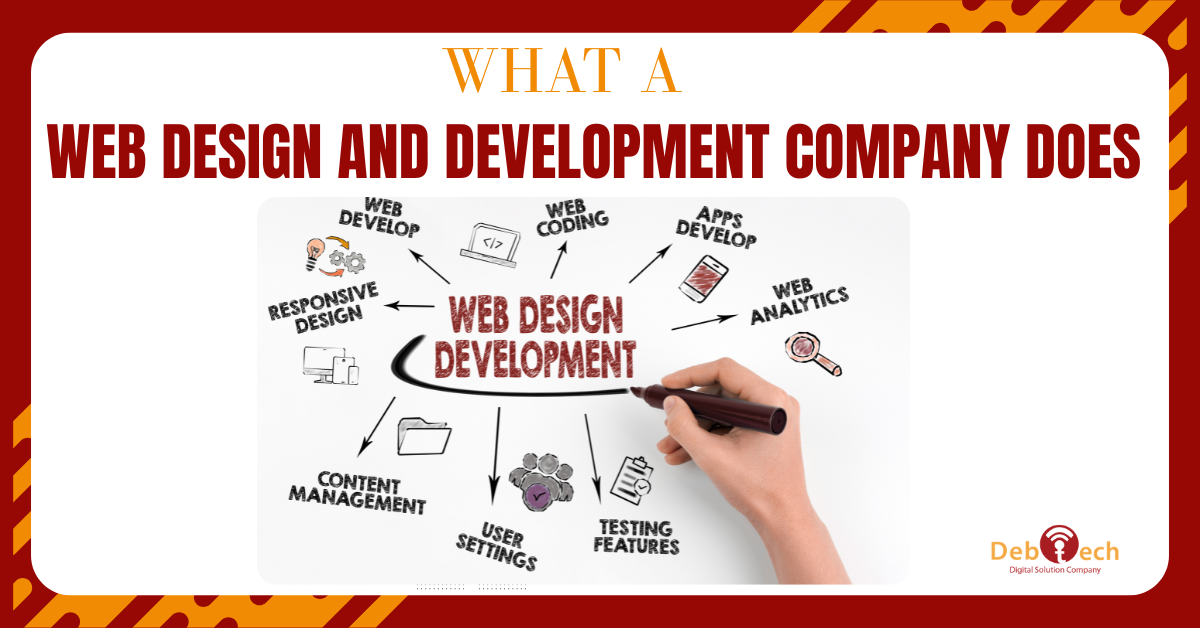
A business owner usually notices the problem long before they name it. Leads are coming in, but not enough of them. Traffic exists, but the site does not convert. Ads are running, yet the landing pages feel disconnected from the campaign. That is the point where a web design and development company stops being a nice-to-have and starts becoming an operational growth decision.
The mistake many companies make is treating the website like a standalone creative project. They hire for visuals first, then bolt on SEO later, then bring in someone else for ads, analytics, or conversion tracking. The result is predictable: fragmented execution, unclear accountability, and a digital presence that looks acceptable but underperforms where it matters most - revenue, lead quality, and efficiency.
What a web design and development company should actually deliver
At a baseline, a web design and development company designs and builds websites. That part is obvious. What matters more is whether the company understands the website as a business system rather than a collection of pages.
A high-performing website has to do several jobs at once. It needs to represent the brand clearly, load quickly, work on mobile devices, support search visibility, and move visitors toward action. If even one of those pieces is weak, the entire system loses value. A beautifully designed site that is slow, difficult to update, or poorly structured for search can hurt growth just as much as an outdated site.
This is why serious companies look beyond surface design. They want a partner that can align user experience, technical development, content structure, and performance metrics. For a local service business, that may mean stronger location relevance and cleaner lead flow. For a growth-stage company, it may mean building landing pages and conversion paths that support paid acquisition. For a more complex organization, it may mean integrating the site into broader sales and marketing operations.
Design matters, but conversion matters more
Many websites fail because they are designed for internal preferences instead of customer behavior. Stakeholders debate colors, homepage layouts, and headline wording, while the real questions get ignored. Can users find what they need in seconds? Does the page reduce friction? Is the next step obvious? Is trust built quickly enough to earn a call, form fill, or purchase?
Good design is not decoration. It is decision architecture.
That means the layout should support scanning, the messaging should answer buying questions early, and the call to action should match user intent. A first-time visitor may need proof, clarity, and reassurance before taking action. A returning visitor may want direct access to a quote request, demo, or contact form. The site has to support both without feeling cluttered.
This is where many firms separate themselves. Some can make a site look modern. Fewer can build one that consistently improves lead conversion.
The mobile-first standard is no longer optional
For most businesses, mobile traffic is not secondary. It is the dominant user experience. If a website looks fine on desktop but forces users to pinch, scroll, or guess their way through the page on a phone, performance drops fast.
A capable team designs for mobile behavior from the start. That affects menu structure, page speed, form design, button placement, image handling, and content hierarchy. It also affects how campaigns perform. Paid traffic and local search traffic often arrive from mobile users with immediate intent. If the site creates friction at that moment, acquisition costs rise and conversions fall.
Development is where strategy becomes usable
The design phase gets attention because it is visible. Development is where the business impact gets locked in.
Solid development means the website is built cleanly, loads efficiently, scales as the business grows, and can be maintained without constant workarounds. It also means technical decisions support marketing instead of limiting it. Page templates should not trap the team into weak content structures. CMS choices should not create bottlenecks. Tracking should not be treated as an afterthought.
A reliable web design and development company thinks through what happens after launch. Can the team create landing pages without rebuilding the whole site? Can developers implement new functionality without destabilizing performance? Can marketers track form submissions, calls, and campaign results accurately? Those are not side issues. They are the difference between a website that helps the business and one that becomes another maintenance problem.
SEO and development should not live in separate silos
One of the most expensive mistakes in digital execution is building the site first and worrying about search visibility later. Technical structure, page hierarchy, internal linking logic, metadata implementation, schema opportunities, image handling, and content templates all influence SEO performance.
If the development process ignores those foundations, the business often pays twice - once to build the site and again to fix structural issues that should have been handled from the beginning.
That does not mean every company needs an enterprise SEO buildout on day one. It does mean the website should be created with search readiness in mind. For local businesses, that can directly affect map visibility, service page performance, and regional lead generation. For companies in competitive markets, it can determine whether content investments actually gain traction.
Why integrated execution usually outperforms fragmented vendors
A common scenario looks like this: one freelancer handles design, another manages development, a separate consultant runs SEO, and someone else oversees ads. Each person may be competent, but the business still loses time and money because nobody owns the full system.
When lead quality drops, the ad manager blames the landing page. The designer points to the copy. The developer says tracking was never defined. The SEO consultant says the site architecture is limiting organic growth. The business owner ends up coordinating specialists instead of getting a solution.
An integrated model reduces that drag. When design, development, SEO, and campaign thinking are aligned from the start, execution gets faster and accountability gets clearer. The website is built to support visibility, paid traffic, and conversion instead of forcing those functions to adapt after launch.
That approach tends to work especially well for small and midsize businesses that do not have an internal team large enough to manage multiple vendors. It also helps organizations that care about operational clarity. One accountable partner is easier to evaluate than four disconnected providers with overlapping responsibilities.
How to evaluate a web design and development company
The right questions are usually more practical than people expect. Instead of asking only about style or turnaround time, ask how the company approaches business goals.
Start with process. A serious partner should be able to explain how discovery works, how site goals are defined, how user journeys are mapped, and how performance will be measured after launch. If the answer is mostly about visuals, that is a warning sign.
Then look at how they think about conversion. Do they ask about lead sources, sales process, target audience behavior, and campaign integration? Or do they treat every website like the same generic build with different branding?
It is also worth asking how they handle mobile experience, page speed, content structure, analytics, and future scalability. A website is not successful because it launches on schedule. It is successful when it helps the business generate better outcomes over time.
For companies in competitive local markets, regional understanding can matter too. A team that knows how local search behavior works in places like Northern Virginia will often make stronger decisions around page targeting, service structure, and conversion content than a generic provider with no market context.
What the best engagements look like
The strongest client-agency relationships are built on shared commercial goals. The company is not buying pages. It is investing in a digital asset that should improve visibility, reduce friction, and create measurable movement in leads or sales.
That changes the conversation. Instead of asking, "Do we like this homepage?" the better question becomes, "Will this page help qualified users take the next step?" Instead of asking, "Can we add more features?" the better question becomes, "Will this improve performance, or just add complexity?"
That mindset is where a results-driven partner earns its value. At Debtech, the work is framed around integrated execution because businesses rarely suffer from one isolated digital problem. They struggle with a chain of problems - weak messaging, poor mobile usability, slow pages, inconsistent SEO foundations, disconnected campaigns, and unclear measurement. Solving one piece without addressing the system usually leaves growth on the table.
The real value is not the website alone
A website can look better after a redesign and still fail commercially. That is why business leaders should expect more from a web design and development company than polished visuals and launch-day delivery.
The real value is alignment. Strategy aligned with user intent. Design aligned with conversion. Development aligned with performance. Search visibility aligned with how customers actually find the business. When those pieces work together, the website stops acting like an online brochure and starts functioning like a growth asset.
If your current site is creating more questions than results, that is usually not a traffic problem alone or a design problem alone. It is a system problem. Fix the system, and better performance tends to follow.