
SEO vs PPC for Small Business: Which Wins?
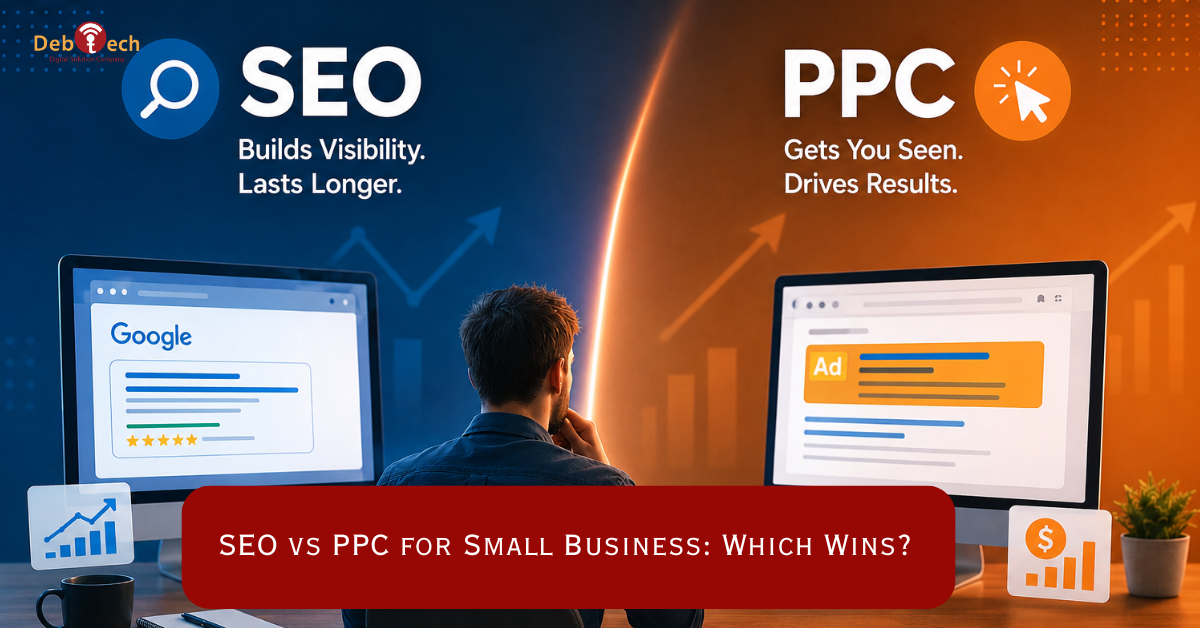
A small business usually asks this question right after the leads slow down or the website starts underperforming: should we put our effort into SEO, paid ads, or both? That is exactly where the seo vs ppc for small business decision becomes less of a marketing debate and more of an operational one. The right answer affects lead volume, sales velocity, cash flow, and how dependent your business becomes on ongoing ad spend.
For most owners and marketing leaders, the mistake is not choosing the wrong channel. It is expecting one channel to solve every growth problem on its own. SEO and PPC do different jobs. If you treat them as interchangeable, you will usually overspend, wait too long for results, or scale traffic that does not convert.
SEO vs PPC for small business: the real difference
SEO builds visibility over time by helping your website earn organic search traffic. That means improving technical performance, site structure, content quality, local relevance, and conversion paths so your business appears when people search for what you offer. The upside is durability. Once rankings improve, you can generate traffic without paying for every click.
PPC works differently. You pay to appear in front of a defined audience immediately, usually based on keywords, geography, intent, or behavior. The upside is speed and control. You can launch campaigns quickly, test offers, and drive traffic this week instead of waiting months for organic momentum.
That difference matters because small businesses rarely have unlimited time and budget. SEO is a compounding asset. PPC is a controllable acquisition engine. One builds equity in your digital presence. The other buys attention now.
When SEO makes more sense
SEO tends to be the stronger play when your business needs consistent visibility, not just bursts of traffic. If customers regularly search for your services, compare providers, read reviews, and research before contacting you, organic search can become one of your most efficient lead sources.
This is especially true for local service businesses. If someone is searching with clear intent, your goal is to show up in the map pack, organic listings, and service-focused pages that match the query. Over time, strong SEO can reduce your dependence on paid channels and improve lead quality because users often trust organic results more than ads.
SEO also tends to perform well when your site supports the effort. If your website is fast, mobile-friendly, structured well, and built around conversion, the traffic you earn has somewhere productive to go. If the site is weak, SEO can still drive visits, but it will not fix low conversion rates by itself.
The trade-off is patience. SEO usually does not deliver immediate volume. It requires technical work, content alignment, and enough consistency for search engines to recognize authority and relevance. For a business that needs leads right now, that timeline can feel too slow.
When PPC makes more sense
PPC is often the better choice when speed matters. If you are launching a new service, entering a new market, filling a sales gap, or testing demand, paid search gives you immediate data. You can see which keywords generate clicks, which offers drive form fills, and which landing pages convert.
That level of control is valuable for small businesses that need accountability. Instead of waiting for rankings to improve, you can put budget behind high-intent searches and start learning fast. A well-managed campaign can also protect your pipeline during seasonal shifts or competitive periods when relying on organic traffic alone is risky.
PPC is also useful when search results are crowded. If larger competitors dominate organic listings, ads can help you gain visibility while your SEO foundation catches up. It is not a permanent shortcut, but it can close the gap.
The trade-off is equally clear. The moment you stop funding the campaign, traffic stops. That means PPC is efficient only when the numbers work. If clicks are expensive, landing pages are weak, or follow-up is slow, paid campaigns can waste budget quickly.
SEO vs PPC for small business: what affects ROI most
Many businesses frame this as a traffic question. It is really a conversion question.
If your website does not convert, both channels underperform. Organic traffic will bounce. Paid traffic will burn budget. Before deciding where to invest more heavily, you need to look at the system behind the traffic. Is the messaging clear? Is the mobile experience clean? Are forms simple? Does each service page match the search intent behind the keyword or ad?
This is where the strongest results usually come from integrated execution rather than isolated tactics. A conversion-focused website, search visibility, landing page strategy, and campaign management have to work together. That is why businesses often think SEO failed when the actual issue is site structure, or think PPC is too expensive when the real problem is a weak landing page.
ROI also depends on your sales cycle. If you sell a service that requires trust and research, SEO often plays a bigger role because buyers spend time comparing options. If your offer is urgent and transactional, PPC may generate faster wins because it captures intent in the moment.
The best choice depends on your growth stage
A newer business often benefits from PPC first because it needs immediate visibility and real user data. You can learn what people search for, which offers resonate, and which pages convert before your organic presence matures. That learning can then strengthen SEO.
An established business with a functioning website and some brand recognition may benefit more from expanding SEO, especially if it already has proof of demand. In that scenario, building stronger organic rankings can improve lead consistency and lower reliance on paid acquisition over time.
A business in active growth mode often needs both. PPC fills the short-term pipeline while SEO builds long-term resilience. That combination is especially effective when both channels are aligned around the same service priorities and geographic targets.
Why the smartest small businesses rarely choose only one
The strongest strategy is usually not SEO or PPC. It is sequencing and integration.
PPC can tell you which keywords convert before you commit heavily to long-form SEO efforts. SEO can reduce pressure on ad spend by capturing demand organically for your most important services. Paid search can support high-priority offers while SEO strengthens category-level visibility. Together, they give you both speed and staying power.
This matters even more in competitive local markets. Businesses that rely only on ads can become vulnerable to rising click costs and inconsistent campaign performance. Businesses that rely only on SEO may miss immediate opportunities and move too slowly when market conditions change. A balanced approach gives you more control.
At Debtech, this is typically where business owners get the most traction: not by asking which channel is better in theory, but by identifying where the current funnel is weakest and fixing that first. Sometimes the answer is paid traffic. Sometimes it is local SEO. Often it is the website sitting between the two.
How to decide what to prioritize first
Start with urgency. If lead flow is weak and the business needs demand now, PPC deserves attention first. If the pipeline is stable but acquisition costs are too high, SEO may be the smarter investment.
Then look at intent. If customers search with clear service-related terms and compare providers online, SEO has strong upside. If you need fast testing, controlled targeting, or support for time-sensitive campaigns, PPC is the practical move.
Next, assess your foundation. A slow, outdated, or low-converting website will limit both channels. Before scaling traffic, make sure the site is built to turn visitors into inquiries, calls, and sales conversations.
Finally, think beyond channel performance. The right strategy should reduce wasted spend, improve lead quality, and create a more dependable growth system. That is the standard worth using.
A small business does not need more scattered marketing. It needs a channel mix that matches business reality - your timeline, your market, your website, and your sales process. When those pieces align, SEO and PPC stop competing with each other and start doing what they are supposed to do: generating measurable growth.