
Loudoun County PPC Management That Drives Leads
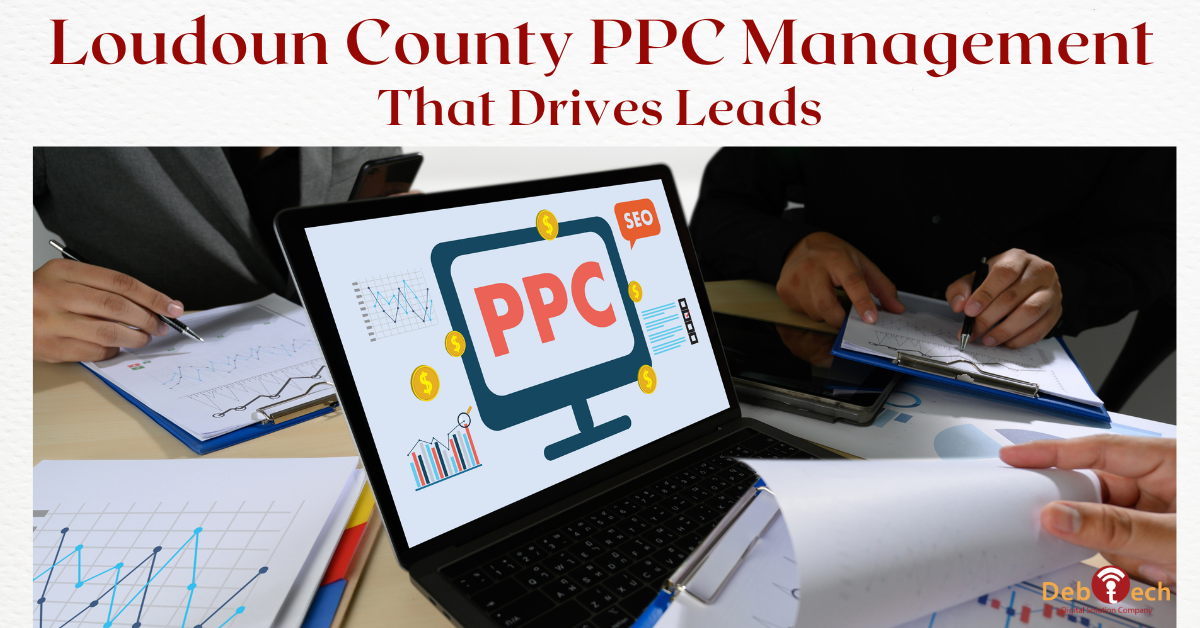
A paid search campaign can look busy while producing very little business value. Click volume rises, reports show activity, and the phone still does not ring with qualified prospects. For companies investing in Loudoun County PPC management, the real standard is not traffic. It is whether paid media creates attributable leads, sales, appointments, and opportunities your team can act on.
That requires more than choosing keywords and setting a monthly budget. It requires a conversion-focused system that connects campaign strategy, landing pages, tracking, follow-up, and ongoing optimization. When one part is weak, the entire campaign becomes harder to scale.
Why Local PPC Requires More Than a Keyword List
Loudoun County is not one uniform market. An Ashburn technology company, a Leesburg home service provider, and a Sterling professional practice may all use Google Ads, but their buyers search differently, compare alternatives differently, and take different paths before contacting a business.
A campaign built around broad, generic terms can waste spend quickly. High-intent local searches are valuable, but they are competitive. Broad service keywords can also pull in research queries, job seekers, vendors, and prospects outside the service area. Effective PPC management starts by separating true buying intent from traffic that merely looks relevant in a dashboard.
That distinction informs every decision: which searches deserve their own ad groups, where geographic targeting should be restricted, which services should receive more budget, and which terms should be excluded. A local campaign should not try to reach everyone. It should work harder to reach the people most likely to become customers.
What Strong Loudoun County PPC Management Looks Like
A productive account is built for control. It makes it easy to see what is generating quality outcomes, what is consuming budget, and what needs to change. The goal is not to make frequent edits for their own sake. The goal is to make evidence-based decisions that improve performance over time.
Start with the economics of a qualified lead
Before launching ads, define what a meaningful conversion is. For one business, that may be a completed consultation request. For another, it may be a phone call that lasts more than a set duration, a scheduled service, a completed purchase, or a request that meets specific qualification criteria.
This matters because not all leads carry equal value. A campaign that produces many incomplete forms may appear efficient at the top level but create more work for sales or operations without producing revenue. Conversion tracking should reflect the outcomes the business actually values, not the easiest events to count.
For longer sales cycles, the measurement plan should extend beyond the first form submission. Connecting qualified leads and closed opportunities back to paid campaigns provides a clearer view of which keywords and audiences create a real pipeline. It takes more operational discipline, but it prevents decisions based on superficial metrics.
Build campaigns around intent and service priorities
Search campaigns should be organized around the services, locations, and customer needs that matter most to the business. Someone searching for a specific solution is usually closer to action than someone searching for a general definition or early-stage idea. Those searches should not be treated the same way.
Campaign structure also needs to reflect business priorities. If a company has limited capacity for a service, there is little value in pushing budget toward it simply because it earns cheap clicks. The best PPC programs align with availability, margins, sales goals, and seasonal demand.
This is where an integrated agency relationship has practical value. Paid media strategy improves when the team managing ads understands the website, service positioning, organic search performance, and lead-handling process. Isolated vendors often optimize their individual channel. A growth partner optimizes the system.
Treat the landing page as part of the ad campaign
An ad can earn the click and still lose the prospect within seconds. Slow mobile load times, vague headlines, generic copy, difficult forms, and weak trust signals all reduce conversion rates. The result is a common problem: the business pays more for leads because the destination does not do enough work.
A strong landing page matches the promise of the ad. It makes the service clear, explains why the business is credible, answers common objections, and gives the visitor an obvious next step. For local buyers, details such as service area, response expectations, reviews, certifications, and relevant experience can help remove uncertainty.
Not every campaign needs a separate landing page. A well-built service page can perform well when it closely matches the query and includes a clear conversion path. But when a campaign targets a high-value offering or a tightly defined audience, a dedicated page often creates better message alignment and cleaner testing.
The Numbers That Matter After the Click
Click-through rate, cost per click, and impression share are useful signals. They are not the finish line. A campaign can have an excellent click-through rate while attracting low-intent visitors, and a higher cost per click can be worthwhile if those visitors convert into stronger opportunities.
Performance should be evaluated through a connected set of questions. Are the search terms relevant? Are visitors taking meaningful action? Which campaigns produce qualified leads? What happens after a lead reaches the sales team? Are mobile users converting as effectively as desktop users? Is there a gap between ad messaging and the landing-page experience?
The answers are rarely static. Search behavior changes, competitors adjust offers, and business priorities shift. Ongoing management means reviewing search terms, refining negative keywords, testing ad messaging, reallocating budget, monitoring conversion quality, and checking the accuracy of tracking. It also means knowing when not to change a campaign before enough data is available.
Automation needs guardrails
Google Ads automation can help identify opportunities and manage bids at scale, but it is not a substitute for strategy. Automated systems depend on the conversion data they receive. If tracking counts low-value actions as success, the platform may optimize toward more low-value actions.
Automation works best when it supports a clear account structure, reliable conversion definitions, and ongoing human review. It depends on the account, the amount of historical data available, and how quickly the business can validate lead quality. For newer campaigns, controlled testing and close monitoring are often more useful than handing every decision to automated bidding immediately.
Common Reasons PPC Campaigns Underperform
Underperforming campaigns are not always caused by a bad platform or an insufficient budget. More often, the issue is a disconnected execution process. Ads are launched without conversion tracking, traffic is sent to a generic homepage, leads are not followed up quickly, or reports emphasize clicks instead of revenue outcomes.
Another frequent issue is targeting that is too broad. A company may want more volume, so it expands keywords or geographies before proving that its core campaigns convert. That can increase spend without improving pipeline. Expansion should follow performance, not replace it.
Weak differentiation also limits results. If every ad says the same thing as every competitor, buyers have little reason to choose one business over another. Strong PPC copy reflects a real advantage: specialized expertise, a faster process, a proven approach, relevant credentials, or a better customer experience. The claim must be specific enough to matter and credible enough to support.
A Better Operating Model for Paid Acquisition
The most effective PPC programs run as part of a broader digital growth system. Paid search surfaces immediate demand. Conversion-focused pages turn more of that demand into action. SEO strengthens visibility for searches that should not rely entirely on ads. Reputation signals help prospects trust the business. Clear analytics show which efforts produce results.
Debtech approaches paid acquisition with that connected view. The work begins with goals, tracking, account structure, and landing-page readiness, then continues with transparent optimization against meaningful business outcomes. That model gives leaders fewer disconnected reports and a clearer line from campaign activity to sales performance.
The next useful step is not launching more ads. It is identifying where the current path breaks: search intent, targeting, message match, mobile experience, tracking, or lead follow-up. Fix that constraint first, and every future paid click has a better chance to become revenue.