
Local Search Visibility Guide for Growth
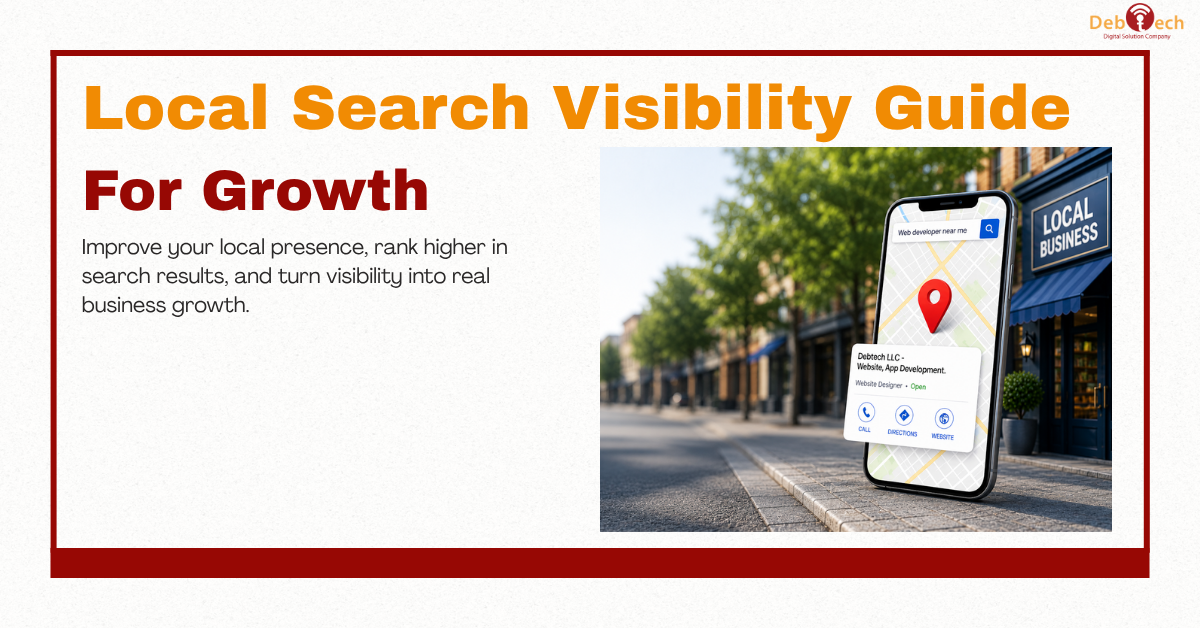
Most local SEO problems are not actually ranking problems. They are execution problems. A business shows up inconsistently across directories, its Google Business Profile is thin, the website loads slowly on mobile, and the pages that do rank fail to turn visitors into calls or form submissions. That is where a real local search visibility guide becomes useful - not as a checklist to skim, but as a system for getting found by the right customers and converting that attention into revenue.
For small and midsize businesses, local visibility is one of the highest-leverage growth channels available. It reaches people with active intent. They are not casually browsing. They are searching for a nearby provider, comparing options, and deciding quickly. If your business is missing from map results, buried under stronger competitors, or sending traffic to a weak website, you are losing demand that already exists.
What local search visibility actually means
Local search visibility is the ability of your business to appear prominently when nearby customers search for your services. That includes map pack results, localized organic rankings, branded searches, and reputation signals that influence whether someone clicks at all.
Visibility is not one metric. It is the combined effect of relevance, proximity, prominence, and usability. Relevance comes from how clearly your business matches the search. Proximity depends on where the searcher is located. Prominence is built through reviews, citations, backlinks, brand mentions, and real-world authority. Usability decides whether the traffic you earn becomes a lead.
This is why isolated fixes rarely move the needle for long. A business can optimize titles and still underperform because its reviews are stale. It can collect reviews and still struggle because its core service pages are weak. It can rank in maps and still lose business because the mobile experience is frustrating. Strong local SEO is integrated execution.
A practical local search visibility guide for businesses that want results
The first priority is your Google Business Profile. For many local service providers, this is the front door. If it is incomplete, outdated, or poorly categorized, rankings and click-through rate both suffer. The basics still matter: correct business name, accurate primary and secondary categories, service areas where appropriate, current hours, complete service descriptions, strong photos, and consistent business information.
But the difference between average and high-performing profiles usually comes from activity and specificity. Businesses that publish meaningful updates, answer questions, add fresh photos, and maintain a steady review flow tend to send stronger trust signals. The profile should reflect how your business actually operates today, not how it looked a year ago.
Reviews deserve more than passive attention. They affect rankings, consumer trust, and conversion behavior. A business with a polished website but weak or outdated reviews will often lose to a competitor with more visible proof of customer satisfaction. Quantity matters, but relevance and recency matter too. Reviews that mention specific services, turnaround time, professionalism, or location context are more persuasive than generic praise.
There is a trade-off here. Aggressive review campaigns can backfire if the process feels forced or if your team asks at the wrong moment. The better approach is operational. Build review requests into your customer workflow after successful outcomes, and make sure someone is responding consistently. A neglected review profile signals a neglected customer experience.
Your website still carries the weight
A common mistake is treating local SEO as if the map listing does all the work. It does not. Your website validates your authority and captures demand at the page level. Service pages, city-relevant pages where appropriate, and a strong technical foundation all support local search performance.
Every core service should have its own page with clear intent, useful copy, and conversion paths that are easy to find on mobile. If you serve multiple nearby markets, location pages can help, but only if they are genuinely differentiated. Thin pages that swap out city names tend to underperform and can weaken trust. A page for Ashburn should not read exactly like a page for Reston with one word changed.
What works better is service-plus-location relevance grounded in real experience. Mention service patterns, customer needs, logistics, or market context only when they add value. A local page should answer the question, why should someone in this area choose you for this service?
Technical performance matters more than many businesses realize. Slow load times, poor mobile layout, weak internal structure, and confusing calls to action reduce the value of every ranking gain. Search visibility without conversion performance is expensive waste. At Debtech, that is why SEO and web performance should not be treated as separate conversations.
Build consistency across the web
Search engines compare your business details across multiple sources. If your name, address, phone number, categories, or business descriptions vary too much, confidence drops. This does not mean you need to be everywhere. It means the places that matter should be accurate and aligned.
Citation quality is more useful than citation volume. A clean presence on major data sources, industry directories, local business platforms, and key profiles is usually more effective than dozens of low-value listings. If your business has moved locations, changed phone numbers, or rebranded, citation cleanup becomes even more important.
This step is often ignored because it is tedious. It is also one of the reasons local rankings plateau. If your off-site footprint is fragmented, your local authority is fragmented too.
Content should support local intent, not pad your site
Local content works when it answers real buyer questions and reinforces topical authority. It fails when it exists only to target keywords. Businesses do not need endless blog posts to compete locally. They need strategic content that supports services, addresses objections, and shows expertise.
For example, a service company might publish content that explains common project timelines, what affects results, how to evaluate vendors, or what buyers should prepare before starting. These topics attract searches, support sales conversations, and strengthen trust. If there is a genuine regional angle, include it. If not, forcing geography into every article adds little value.
Content should also support entity clarity. Search engines want confidence about what your business does, where it operates, and why it is credible. Clear service architecture, well-written page copy, FAQ content where it helps, and supporting proof points all contribute.
Local authority is earned, not declared
Businesses often focus heavily on their own website and profile while ignoring broader authority signals. Strong local visibility usually correlates with real mentions, relevant backlinks, and brand recognition in the market. That can come from partnerships, associations, sponsorships, local coverage, or industry-specific references.
Not every business needs a large-scale link campaign. But most benefit from earning signals that show they are established and trusted in their category. A local business with strong reviews, a credible website, consistent listings, and no third-party authority may still be outranked by a competitor with a stronger reputation footprint.
This is also where specialization matters. A generalist message tends to blend in. A business that clearly communicates its vertical focus, process, outcomes, and proof often earns stronger engagement signals and more qualified links over time.
Measure the right outcomes
Rankings matter, but they are not the goal. Calls, form fills, booked appointments, qualified leads, and closed revenue are the goal. A useful local search visibility guide should push businesses to measure visibility in commercial terms.
That means looking beyond where you rank for a few trophy keywords. Track Google Business Profile interactions, landing page conversions, call quality, branded search growth, review velocity, and how specific locations or service pages perform. If a page ranks but does not convert, it needs stronger messaging or UX. If your profile gets views but few actions, your offer or trust signals may be weak.
It also means accepting that not every market behaves the same way. Competitive density, search behavior, service urgency, and proximity bias all affect performance. A law firm, med spa, contractor, and B2B service provider will not win with the exact same local strategy. The principles are shared, but execution has to match the business model.
Where businesses usually get stuck
Most companies do not fail because they lack tools. They fail because no one owns the full system. The website team is separate from the SEO vendor. Reviews are left to the office manager. Paid ads run without local landing page alignment. Reporting is disconnected from revenue. The result is activity without traction.
Local search visibility improves fastest when one strategy connects profile optimization, website performance, content, reputation management, and conversion tracking. That is what turns search presence into a dependable growth channel instead of a monthly guessing game.
If your business already has some visibility but results are inconsistent, do not assume the answer is more content or more listings. Start by finding the breakpoints in the system. Check whether your profile is fully built out, whether your service pages match search intent, whether mobile visitors can convert easily, and whether your reputation signals support the quality you claim.
The businesses that win locally are rarely doing one magic thing. They are simply easier to trust, easier to find, and easier to buy from. That is the standard worth building toward.