
How to Reduce Cost Per Lead Without Cutting Growth
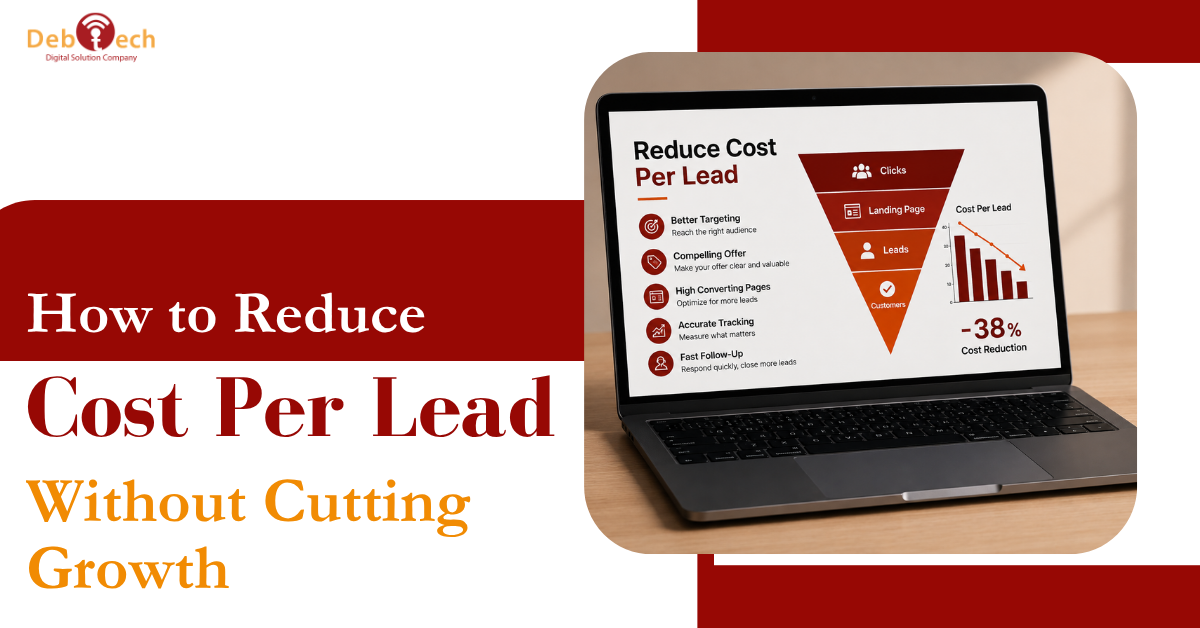
A lead that costs less but never answers the phone, requests a quote, or becomes a customer is not a win. The real answer to how to reduce cost per lead is not simply to lower ad spend. It is to build a tighter acquisition system that attracts better-fit prospects and removes friction between the first click and the sales conversation.
For growing businesses, high cost per lead usually points to one of four problems: the campaign is reaching the wrong audience, the offer is not compelling enough, the landing page loses visitors, or the tracking cannot show what is actually working. Fixing those gaps can improve lead volume and quality at the same time.
Start With Lead Quality, Not Just CPL
Cost per lead is calculated by dividing campaign spend by the number of leads generated. It is useful, but it can become misleading when every form fill, call, chat, or download is treated as equal.
A local service business may receive inexpensive inquiries from people outside its service area. A B2B company may generate a low-cost stream of contacts who lack authority or budget. Both campaigns can appear efficient in an ad dashboard while creating work for the sales team and little revenue.
Before trying to lower CPL, define what counts as a qualified lead. This may include location, service need, company size, urgency, or the ability to make a purchase decision. Track the path from inquiry to qualified opportunity, not only the initial conversion event. A slightly higher CPL can be the stronger business result if those leads consistently produce sales.
Audit Where Lead Costs Are Rising
Do not make broad changes because the average CPL increased. Break the data down first. Review performance by channel, campaign, audience, device, location, keyword theme, ad creative, and landing page. The goal is to find the specific point where efficiency is being lost.
For example, mobile traffic may account for most clicks but convert poorly because the form is difficult to complete on a phone. One geographic area may generate strong leads while another produces irrelevant calls. A single campaign may be consuming a budget with no meaningful contribution to qualified inquiries.
Look at more than CPL during this audit. Review click-through rate, conversion rate, cost per qualified lead, call quality, lead response time, and close rate when that data is available. A complete view prevents the common mistake of cutting campaigns that introduce high-value prospects earlier in their buying process.
Check Tracking Before Making Decisions
Bad tracking creates bad optimization. Confirm that form submissions, phone calls, chat starts, booked appointments, and thank-you page visits are recorded correctly. If you use more than one campaign channel, make sure attribution is consistent enough to compare results.
Also check for duplicate conversions, spam submissions, test leads, and forms that fire tracking events before a visitor successfully completes the submission. Inflated lead numbers make CPL look better than it is, then leave sales teams wondering why pipeline results do not match the reports.
Improve Targeting Before Increasing Traffic
Many high-CPL campaigns are not traffic problems. They are targeting problems. Sending more people to a weakly targeted campaign often creates more waste, not more growth.
Start by reviewing the customer characteristics shared by your best leads. Consider their location, search intent, device behavior, business type, job title, and the services they request most often. Use that information to narrow audience settings and align campaigns with real buying signals.
In paid search, separate high-intent queries from broad research terms. Someone searching for a specific solution, provider, or service in their area is usually further along than someone looking for general information. Negative keywords matter here as well. They prevent ads from appearing for searches that are unrelated, job-seeking, informational, or outside your operating area.
For paid social, avoid relying only on broad interests. Build campaigns around clear offers and audience segments, then test creative that speaks directly to each segment's problem. A founder, operations manager, and local homeowner may all need the same service for different reasons. They should not always see the same message.
Make the Offer Worth the Click
A good targeting strategy can still fail if the offer is vague. “Contact us” asks the visitor to do the work of figuring out why they should reach out. Strong offers reduce uncertainty and give prospects a clear reason to act now.
The right offer depends on the buying cycle. A business with urgent service demand may benefit from a fast consultation or request-for-service form. A company selling a more complex solution may get better results from an assessment, strategy call, or focused resource that helps prospects evaluate their next step.
Keep the promise specific. Tell visitors what they will receive, who it is for, and what happens after they submit. Avoid claims that attract curiosity without attracting qualified demand. The goal is not to maximize form fills at any cost. It is to create a useful exchange that starts a real sales conversation.
How to Reduce Cost Per Lead With Better Landing Pages
Your ad can earn the click, but the landing page earns the lead. If campaigns send traffic to a generic homepage or a page with competing messages, conversion rates often suffer. A dedicated landing page gives one audience one clear path forward.
Match the page headline to the ad message and search intent. If someone clicks an ad about a specific service, the page should immediately confirm they are in the right place. Explain the business outcome, address the most likely objections, and put the primary action where it is easy to find.
Mobile performance deserves special attention. Many prospects will visit from a phone, especially for local and service-based searches. Pages should load quickly, buttons should be easy to tap, and forms should request only the information needed to qualify and follow up. Every extra field creates a trade-off: it may improve qualification, but it can also reduce completion rates.
Trust signals can also lower CPL by helping hesitant visitors convert. Clear service details, relevant credentials, proof of experience, testimonials, and straightforward expectations all reduce perceived risk. Use proof that supports the decision being asked for, rather than filling the page with generic claims.
Test One Variable at a Time
Optimization is not a redesign contest. It is a disciplined process of testing a clear hypothesis. Change too many variables at once, and you will not know what improved or damaged performance.
Test meaningful elements first: the offer, headline, call to action, audience segment, form length, ad angle, and landing page structure. Let tests run long enough to gather useful data, particularly in campaigns with lower conversion volume. A few conversions are not enough to declare a winner.
Document what you learn. Over time, this creates a practical record of which messages attract qualified leads, which channels support the sales process, and which objections repeatedly stop people from converting. That knowledge is far more valuable than a one-time CPL improvement.
Improve Speed to Lead and Sales Feedback
Marketing cannot reduce lead costs alone if the business is slow to respond. Leads cool quickly, especially when prospects are comparing multiple providers. Fast, consistent follow-up improves the chance that paid leads turn into conversations, which improves the effective return on every campaign.
Create a clear handoff process between marketing and sales. Decide who receives new inquiries, how quickly they respond, what information they need, and how lead status is recorded. Sales feedback should flow back into campaign decisions. If a certain source generates unqualified leads, marketing needs to know why. If another source produces smaller volume but stronger opportunities, it may deserve more attention.
This is where an integrated approach creates an advantage. Website development, paid advertising, local visibility, conversion tracking, and follow-up processes should support the same outcome: qualified demand that can be measured from click to customer.
Build Efficiency as a System
Reducing CPL is rarely about one clever ad or one lower-performing keyword. It comes from aligning the entire journey: the audience you target, the message they see, the page they reach, the action you ask them to take, and the speed of your response.
Treat every campaign result as operational feedback. When leads are expensive, investigate the system before cutting the channel. When leads are cheap but weak, improve qualification before celebrating. The businesses that sustain efficient growth are the ones that turn performance data into better execution, week after week.