
How to Build a Lead Funnel That Drives Sales
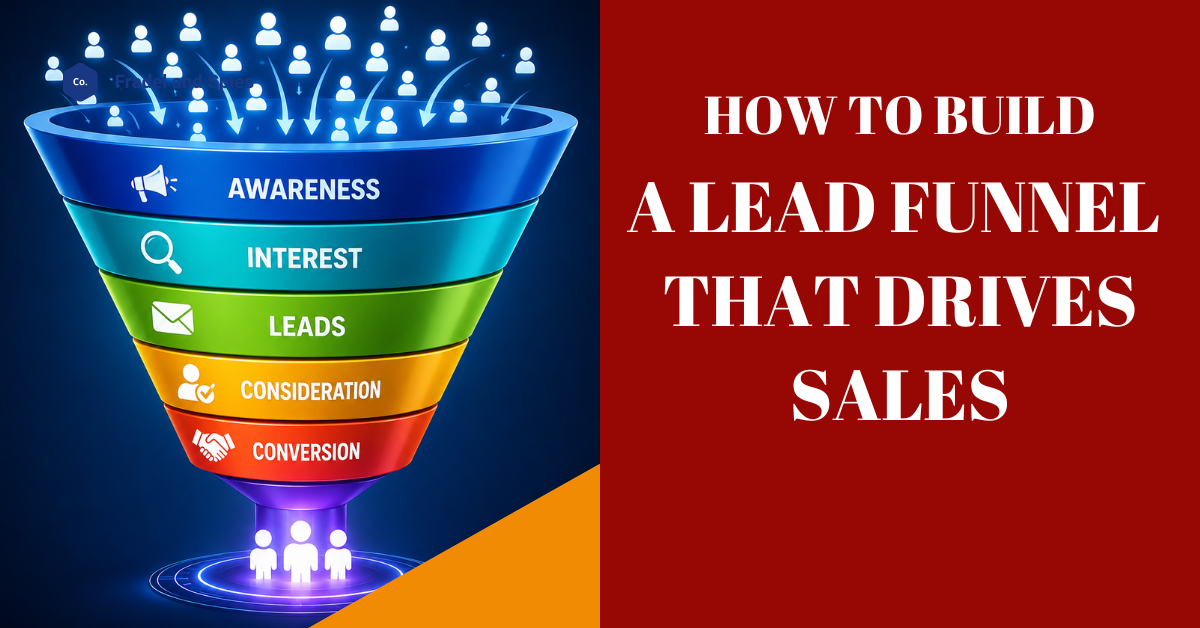
A website that gets traffic but produces few qualified conversations is not a marketing asset. It is a leak in your growth system. Learning how to build a lead funnel means creating a connected path that moves the right prospect from first click to a sales-ready action, while giving your team visibility into what is working and what is wasting budget.
For a local service business, that action may be a call or consultation request. For a B2B company with a longer sales cycle, it may start with a useful resource, a demo request, and structured follow-up. The right funnel depends on how buyers make decisions, but every effective funnel has the same job: turn attention into measurable revenue opportunities.
How to Build a Lead Funnel Around Buyer Intent
Start with the buyer, not the channel. A common mistake is launching ads, publishing content, or redesigning a website before defining who should convert, what problem they need solved, and what makes them act now. That approach creates activity without a reliable path to revenue.
Define your ideal lead in practical terms. Consider industry, location, company size, job title, urgency, budget authority, and the problem that triggered the search. A homeowner looking for immediate repair service behaves differently from an operations leader evaluating a software partner. Their page experience, offer, and follow-up should not be identical.
Then map the decision into three stages: awareness, consideration, and conversion. At the awareness stage, prospects are identifying a problem or researching options. At consideration, they compare providers, proof, approaches, and outcomes. At conversion, they need a clear next step and enough confidence to take it.
The goal is not to force every visitor into a consultation form immediately. Some high-intent visitors will convert on the first visit. Others need proof and repeated exposure. A strong lead funnel gives both groups a logical next action without losing track of either one.
Build the Funnel From Traffic to Sales Follow-Up
A lead funnel is a system, not a single landing page. Each stage must support the next one. If your paid campaign targets a specific service need but sends people to a generic homepage, conversion friction begins before the visitor has read a sentence.
1. Bring in traffic with a clear purpose
Choose acquisition channels based on intent and sales goals. Search engine optimization is valuable for building sustained visibility around service, location, and problem-based searches. Paid search can capture demand quickly when prospects are actively looking. Social media campaigns and email marketing are often more effective for education, retargeting, and staying visible during longer buying cycles.
Do not evaluate every channel by the same first-touch metric. Organic search may take longer to build but can generate durable, high-intent leads. Paid campaigns can deliver faster feedback but require disciplined keyword selection, targeting, landing page alignment, and conversion tracking. The best mix depends on your sales cycle, market competition, and the value of a qualified opportunity.
Every campaign should have one primary destination and one primary conversion goal. Sending a visitor to a page with five competing offers, unrelated navigation paths, and vague messaging creates decision fatigue. Focus creates momentum.
2. Match the landing page to the promise
Your landing page must continue the conversation started by the ad, search result, email, or social post. If someone searches for a specific service in Northern Virginia, they should immediately see that service, relevant outcomes, evidence of capability, and a direct way to contact your team.
Lead with the business problem and the result your service helps produce. Follow with concise proof: relevant experience, process clarity, certifications where applicable, testimonials, case results, or examples of work. Generic claims such as “quality service” rarely move a skeptical buyer. Specificity does.
Mobile performance matters because many prospects will encounter your funnel on a phone. A slow page, cramped form, unclear call button, or hard-to-read offer can turn paid traffic into lost opportunity. Conversion-focused website development means treating speed, usability, and message hierarchy as revenue issues, not design preferences.
3. Make the offer worth the exchange
A lead does not submit information because you want it. They submit because the next step feels valuable, low-risk, and appropriate for where they are in the buying process.
For high-intent visitors, the offer may be a strategy call, assessment, demonstration, or service consultation. For prospects still evaluating options, it may be a practical checklist, industry guide, audit, or comparison resource. The offer should answer a real question or reduce a meaningful uncertainty.
Avoid collecting more information than your team needs at this stage. A short form often improves completion rates, especially for mobile users. If lead quality suffers, add qualifying questions carefully. There is a trade-off: more fields can improve context for sales, but every added field can reduce total conversions. Test based on actual close rates, not assumptions.
4. Respond while intent is still high
The funnel does not end when the form is submitted. In many businesses, this is where the most expensive failure occurs. Leads arrive, sit unanswered, or receive a generic response days later. By then, the prospect may have already contacted competitors.
Create a defined response process. Route the lead to the right person, send an immediate confirmation, notify the sales team, and establish a follow-up standard. For urgent service inquiries, speed matters more than a polished nurture sequence. For complex B2B decisions, a prompt response paired with useful follow-up content can build credibility without pushing too hard.
Your CRM or lead management process should capture source data alongside contact details. Sales teams need to know whether a prospect came from a branded search, a local SEO page, a paid campaign, or a retargeting audience. Marketing teams need lead-status feedback to improve targeting and messaging. Without that closed loop, reporting measures form fills rather than business results.
Use Nurture to Convert Leads That Are Not Ready Yet
Not every qualified lead is ready to buy this week. That does not make them a bad lead. It means your funnel needs a follow-up track that respects their timing while keeping your company relevant.
Email marketing can support this stage with useful, decision-oriented content. Send proof that addresses common objections, explain your process, show the difference between approaches, and provide resources that help the prospect make a better decision. The objective is to build confidence, not flood an inbox with promotional messages.
Retargeting can also reinforce the offer for visitors who viewed key service pages but did not convert. Use it selectively. A visitor who read a detailed service page may need a case example or consultation prompt. A visitor who only bounced after a few seconds may need a different message or may not be worth pursuing aggressively.
Measure the Funnel Where Revenue Is Won or Lost
A lead funnel should be managed through business metrics, not vanity metrics. High traffic, low-cost clicks, and social engagement can be useful signals, but they do not prove that your funnel is creating revenue.
Track the full progression from source to closed opportunity. At minimum, monitor traffic by channel, landing page conversion rate, cost per qualified lead, contact rate, appointment rate, sales-qualified lead rate, and close rate. Review these numbers together. A campaign with a higher cost per lead may be more profitable if its leads convert into customers at a much stronger rate.
Look for friction between stages. If traffic is strong but form submissions are weak, review page-message alignment, offer clarity, mobile usability, and form length. If forms convert but appointments are low, examine response time and qualification. If appointments happen but deals stall, the issue may be sales process, positioning, or buyer fit rather than marketing volume.
This is why isolated vendors often create problems. A media buyer may blame the website, a web developer may blame traffic quality, and a sales team may blame lead quality. An integrated team can trace the breakdown across campaigns, landing pages, tracking, and follow-up. Debtech approaches these systems as connected growth infrastructure because the customer does not experience your marketing in separate departments.
Improve One Constraint at a Time
Do not rebuild an entire funnel because one metric underperforms. Start with the most meaningful constraint and test a focused improvement. If your ads produce qualified clicks but the landing page fails, improve the page before expanding budget. If leads convert but sales response is slow, fix routing and follow-up before redesigning the offer.
Keep a record of changes, dates, and results. This protects your team from making decisions based on memory or opinions. Over time, you will learn which messages attract serious buyers, which channels produce stronger opportunities, and where your sales process needs support.
The best lead funnel is not the one with the most moving parts. It is the one that makes it easy for the right prospect to take the next step, easy for your team to respond with purpose, and easy for leadership to see how marketing contributes to sales. Build that system with discipline, then keep improving it where the data shows the next opportunity.