
10 Best Online Reputation Tools for Growing Businesses
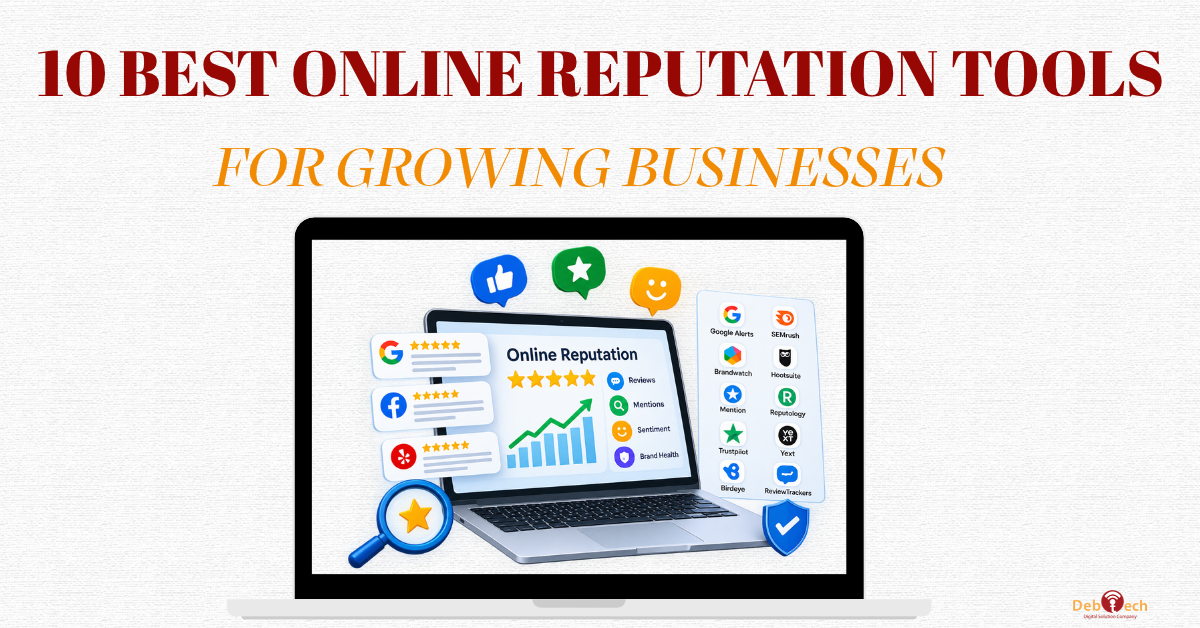
A five-star rating can bring in a qualified lead before your sales team ever gets a call. A few unanswered negative reviews can do the opposite. The best online reputation tools give growing businesses a practical way to monitor feedback, request reviews, respond faster, and see whether public perception is helping or hurting revenue.
For local service companies, multi-location brands, and growth-stage businesses, reputation management is not a side task for when things slow down. It directly affects local search visibility, click-through rates, lead quality, and customer confidence. The right platform turns scattered reviews and mentions into an operating process your team can manage.
What the Best Online Reputation Tools Need to Do
A reputation platform should solve more than one problem. Checking review sites manually may work when a business has a handful of customers, but it fails quickly as reviews arrive through Google, Facebook, industry directories, and other channels.
Start with review monitoring. Your team needs a consolidated view of new reviews and mentions, along with alerts for urgent feedback. Speed matters. A thoughtful response to a frustrated customer within a day is very different from a response posted weeks later, after the issue has shaped dozens of buying decisions.
Next, look for review generation workflows. The strongest tools make it easier to ask satisfied customers for feedback at the right moment, usually after a completed service, purchase, or positive interaction. The objective is not to manipulate ratings or suppress criticism. It is to create a consistent, policy-compliant process that gives real customers an easy way to share their experience.
Listings management is also critical for businesses that depend on local discovery. Incorrect business hours, duplicate listings, wrong phone numbers, or inconsistent addresses create friction for customers and send poor signals to search engines. Finally, reporting should connect activity to business outcomes: review volume, rating trends, response time, sentiment themes, location performance, and visibility.
10 Best Online Reputation Tools to Consider
The best choice depends on your footprint, review volume, existing systems, and who will actually own the process. A local business needs a different setup than an enterprise organization with dozens of locations and a centralized marketing team.
1. Google Business Profile
Google Business Profile is not a full reputation management platform, but it belongs in every reputation strategy. For many local businesses, Google reviews are the most visible trust signal in search results and map listings. Teams can publish updates, answer questions, respond to reviews, and maintain accurate location data.
Its limitation is clear: it only manages the Google ecosystem. Use it as a foundation, not your entire system, if reviews arrive elsewhere or multiple people need structured workflows and reporting.
2. Birdeye
Birdeye is designed for businesses that need review generation, review monitoring, listings support, messaging, and reporting in one system. It is often a strong fit for multi-location organizations that need standardized workflows without losing visibility into performance by branch or market.
Its breadth is the advantage. The trade-off is that teams should define ownership, response standards, and escalation paths before implementation. A platform cannot fix an inconsistent customer experience on its own.
3. Podium
Podium is especially useful for businesses that want to connect reputation management with customer messaging. It helps teams request reviews through text-based communication and manage conversations that can move prospects toward appointments or purchases.
This makes it a practical option for service-driven businesses where speed-to-lead matters. Its value is highest when staff actually use messaging consistently and when review requests are integrated into a clear post-service process.
4. Reputation.com
Reputation.com serves organizations that need a more structured customer experience and reputation operation across locations. Its platform focuses on feedback, reviews, listings, surveys, and analytics, making it relevant for brands with complex operational requirements.
It is most appropriate when reputation data needs to be shared across marketing, customer service, and operations teams. Smaller businesses may not need that level of infrastructure, especially if their primary need is simply earning and responding to more Google reviews.
5. GatherUp
GatherUp focuses on collecting customer feedback and generating reviews through automated campaigns. It can help businesses identify unhappy customers early, follow up with satisfied customers, and keep a more consistent pulse on service quality.
This is a smart choice when the main gap is process discipline. If customers are generally happy but review requests happen randomly, structured follow-up can produce meaningful gains in review volume and recency.
6. ReviewTrackers
ReviewTrackers is built around review monitoring, response management, customer feedback, and analytics. It is a good option for businesses that need a clear way to watch performance across several review sources and locations.
The reporting function can be particularly useful for identifying repeat themes. If negative feedback repeatedly mentions wait times, communication, billing confusion, or a specific location, the real value comes from taking operational action, not just drafting a polished response.
7. Grade.us
Grade.us is a review management platform that supports review request campaigns, monitoring, and reporting. It is often a sensible fit for agencies or teams managing reputation work for multiple brands because it supports organized campaign workflows and client-facing reporting.
For an individual business, its usefulness depends on how much customization and repeatability the team needs. A simple operation may prefer fewer moving parts, while a marketing team managing multiple locations can benefit from greater control.
8. Brand24
Brand24 is more focused on social listening and online mention monitoring than traditional review management. It can help teams identify conversations happening across news sites, social channels, forums, and other public sources before those mentions become larger reputation issues.
It is valuable when your brand receives attention beyond review platforms, such as a growing consumer company, professional services firm, or organization running active campaigns. It does not replace a review-generation platform, but it can strengthen broader brand monitoring.
9. Mention
Mention helps businesses track online conversations, brand references, competitors, and relevant topics. Marketing teams can use it to monitor campaign response and find public feedback that may not appear in a standard review dashboard.
This is best viewed as a listening layer. Businesses with an active social presence can use it to catch concerns early and identify opportunities to engage with positive customer conversations.
10. Sprout Social
Sprout Social is primarily a social media management platform, but its monitoring and engagement features can support reputation management where customer sentiment plays out on social channels. Teams can organize inbound messages, track brand conversations, and maintain more consistent response coverage.
It is a strong complement for brands whose customers regularly use social media for support, complaints, and recommendations. It is less specialized than a dedicated review platform for listings and review-request automation.
How to Choose the Right Reputation Platform
Do not select a platform based on the longest feature list. Select one based on the business problem that is currently costing you leads or trust.
If your Google rating is low because review requests are inconsistent, prioritize automation and staff-friendly request workflows. If customers cannot find accurate location information, listings management should move to the top of the list. If your business has several locations and inconsistent response quality, choose a platform with permissions, templates, approval flows, and location-level reporting.
Also consider how the tool fits into your existing digital system. Reputation data should inform local SEO, website messaging, paid campaign strategy, and customer experience improvements. For example, recurring praise for fast turnaround can become a proof point on a service page or landing page. Recurring complaints about confusing scheduling should trigger a website and operations review.
The implementation plan matters as much as the platform. Assign a clear owner, set response-time targets, create guidance for common review types, and establish an escalation process for serious complaints. Keep responses human. A generic thank-you message may be efficient, but it does little to show accountability or build confidence with future customers.
Turn Reputation Data Into a Growth System
The goal is not to chase a perfect score. Customers know that no real business receives flawless feedback forever. They look for patterns: recent reviews, credible detail, professional responses, and evidence that the business fixes problems when they occur.
A high-performing reputation program gives leadership a clearer view of what customers experience after the sale. It can expose gaps in communication, staff training, fulfillment, and website expectations before those gaps damage conversion rates. For businesses investing in SEO, paid advertising, and a conversion-focused website, that insight protects the return on every other marketing dollar.
Choose a tool your team will use consistently, then build a response and review-request process around it. The strongest reputation is not manufactured by software. It is earned through reliable service, made visible through disciplined execution.